
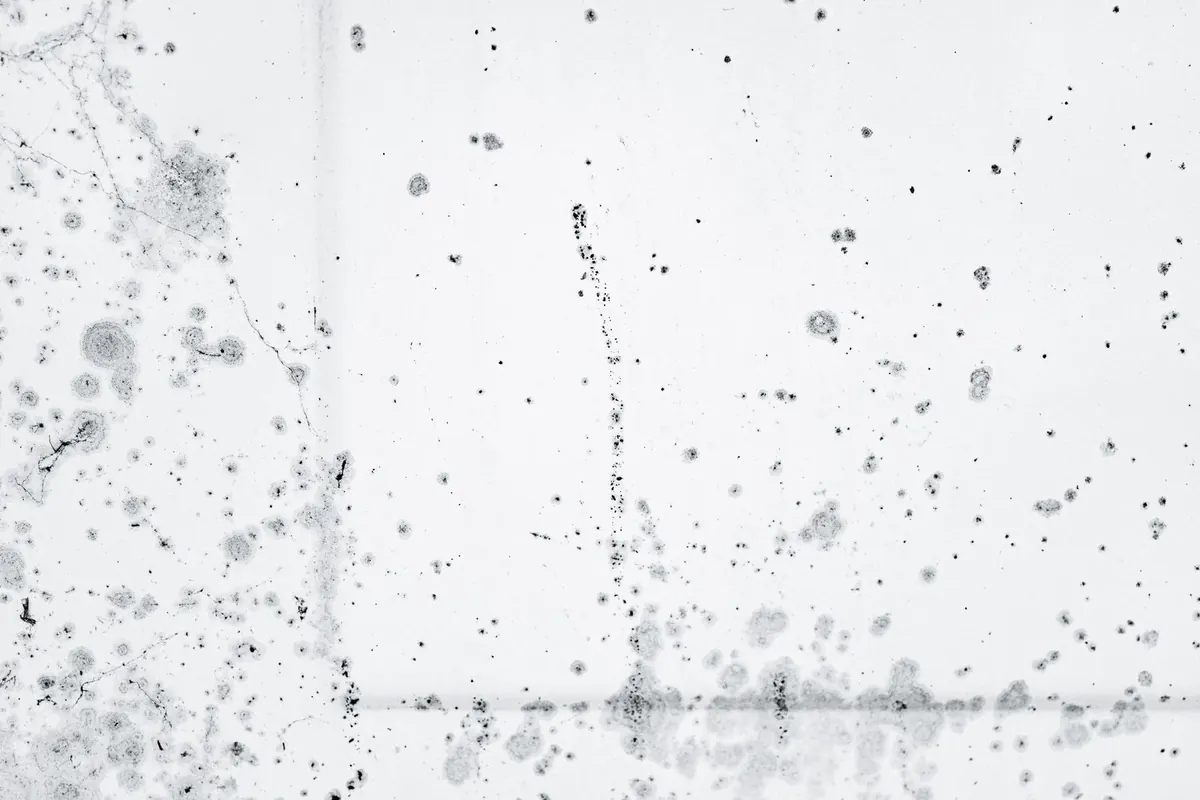
Short answer: black mold removal in Miami means sealing off the room, putting it under negative air, cutting out the affected drywall or trim and bagging it inside the containment, cleaning and treating the framing and block behind it, and drying everything before an independent assessor tests the area. Most single-room jobs are done in two to four days.
What "black mold" usually means in a Miami home
Color is a poor guide to species. Plenty of the dark spotting people call black mold is Cladosporium or Aspergillus, which show up on bathroom ceilings and window frames all over South Florida. Stachybotrys, the one with the reputation, is greenish-black and slimy when it is active, and it only grows on material that has stayed wet for a long time: the paper face of drywall, ceiling tiles, cardboard. So when we find it, the more useful conclusion is that something has been leaking for weeks, not days.
Where we find it
- Under kitchen and bathroom sinks. A slow drip at a supply line or trap soaks the cabinet floor and the drywall behind it, out of sight until the smell gives it away.
- Behind furring strips on exterior walls. Most Miami houses are concrete block with drywall fastened to wood strips over the block. When rain gets through cracked stucco or a tired window seal, it runs down the inside face of the block and the back of the drywall, and the room side stays clean for months.
- Around the AC closet. An overflowing drain pan or a sweating return plenum wets the closet walls and floor.
- Ceilings below a flat roof or a condo unit above. Stained, sagging patches that were painted over once already.
- Behind baseboards after a floor flood. Water wicks up the drywall a foot or more above the line you can see.
How we take it out
- Find the edge. Moisture meter readings and a thermal camera show how far the wet area runs; a small inspection cut shows how far the growth runs on the back of the board.
- Seal the room. Plastic sheeting on walls and doorways, a zippered entry, and HVAC vents in the area covered so spores don't travel through the ductwork.
- Run negative air. A HEPA-filtered air scrubber pulls air out of the work area so any leak in the plastic draws air in, not out.
- Remove and bag. Affected drywall, insulation, baseboard and cabinet backs are cut out, bagged inside the containment and carried out sealed.
- Clean what stays. Studs, furring strips and block are HEPA-vacuumed, scrubbed and treated. Wood that is stained but sound is sanded where needed.
- Dry and hand over. Readings back to normal, the source of the water named, and the room left ready for an independent clearance test.
Small patches you can handle yourself
A few spots on bathroom grout or a window frame are a cleaning job, not a remediation job. The EPA's rule of thumb is that areas under about ten square feet can be cleaned by a homeowner with detergent, gloves and an N-95 mask, provided the surface is hard and the moisture problem is fixed. Once it is on drywall, larger than that, or keeps coming back, it needs containment.
Rebuild and paperwork
We remove; we don't hang drywall over a wall that hasn't cleared. Once the assessor's report comes back clean, the rebuild is a normal repair, and you can use us or your own contractor. You keep the photos, moisture logs and clearance report, which is what an insurer, a buyer or a condo association will ask for.
Typical prices
| Job | Estimate | What it covers |
|---|---|---|
| Small patch behind a sink or vanity | $500–$1,500 | Contained in one cabinet or wall section |
| Black mold remediation, typical job | $2,000–$10,000 | Wall, ceiling or room-scale growth from a long-running leak |
These figures are estimates. They come from published Florida and national remediation pricing, not from a look at your wall. What's behind the drywall decides the real number, and you get that in writing after a free visit. See the full Miami price guide.
Related services
Questions
Is black mold more dangerous than other mold?
The species most people mean, Stachybotrys chartarum, can produce mycotoxins, but the CDC's advice is the same for every indoor mold: remove it and fix the moisture, whatever color it is. People with asthma, allergies or a weakened immune system should keep away from the work area until clearance.
Do I need a test to know if it's black mold?
Usually not. The EPA notes that sampling is rarely needed to decide on removal, because the removal method is the same whatever the species. Testing earns its keep after the job, when an independent assessor confirms the area is clean.
How much drywall has to come out?
Enough to get past the growth on the back of the board, which is often wider than the patch you can see. We open a small inspection cut first, then size the removal from what is behind it.
Last updated October 8, 2026